Claude Ship: What AI Code Review Really Costs Per PR
Claude Ship reviews, fixes and approves pull requests on its own. It is billed per token with no flat price. Here is the real cost of AI code review.

Anthropic announced Claude Ship on November 23, 2026. The pitch is one sentence long: open a pull request and get back to building, because Claude will review it, fix it, and approve it if your policy allows.
That is a real product change, not a feature toggle. Code Review, which went generally available earlier, is now joined by two agents in beta. PR Steward keeps a pull request green by jumping into failing CI checks, merge conflicts, and review feedback. Claude Approvals applies an approval policy written as a file in your repository, which Anthropic describes as a smarter CODEOWNERS file. Together they take a PR from open to mergeable without a human babysitting each step.
Here is the part that matters if you pay the bill: Claude Ship has no flat per-review price. Anthropic bills it on token usage through usage credits, separately from your plan’s included usage. Turning it on is a spend decision dressed as a workflow decision, and the number it produces scales with how your team commits, not with how many seats you bought.
Why AI code review became a cost center in 2026
Search interest in AI code review tools has been volatile, down roughly 29% over three months from a high base, but the commercial intent behind it is not ambiguous. Advertisers pay a CPC above $71 on “ai code review”, the highest of any term in this research set. That price is a proxy for what vendors believe the keyword converts to, and vendors only pay that when the buyer is a company with a budget line.
The reason is volume. A single developer reviewing their own code generates one review per pull request. A team with coding agents writing code generates many more PRs, because the agent does not get tired and the cost of producing a change drops to near zero. Anthropic made this explicit in the announcement: a lot of developers build with agents now, and on the Claude Code team the bottleneck moved from writing code to everything that happens after the PR opens.
That is the structural shift. When generation gets cheap, verification becomes the scarce resource, and whatever you pay for verification starts to dominate your engineering tooling bill.
How Claude Ship actually bills
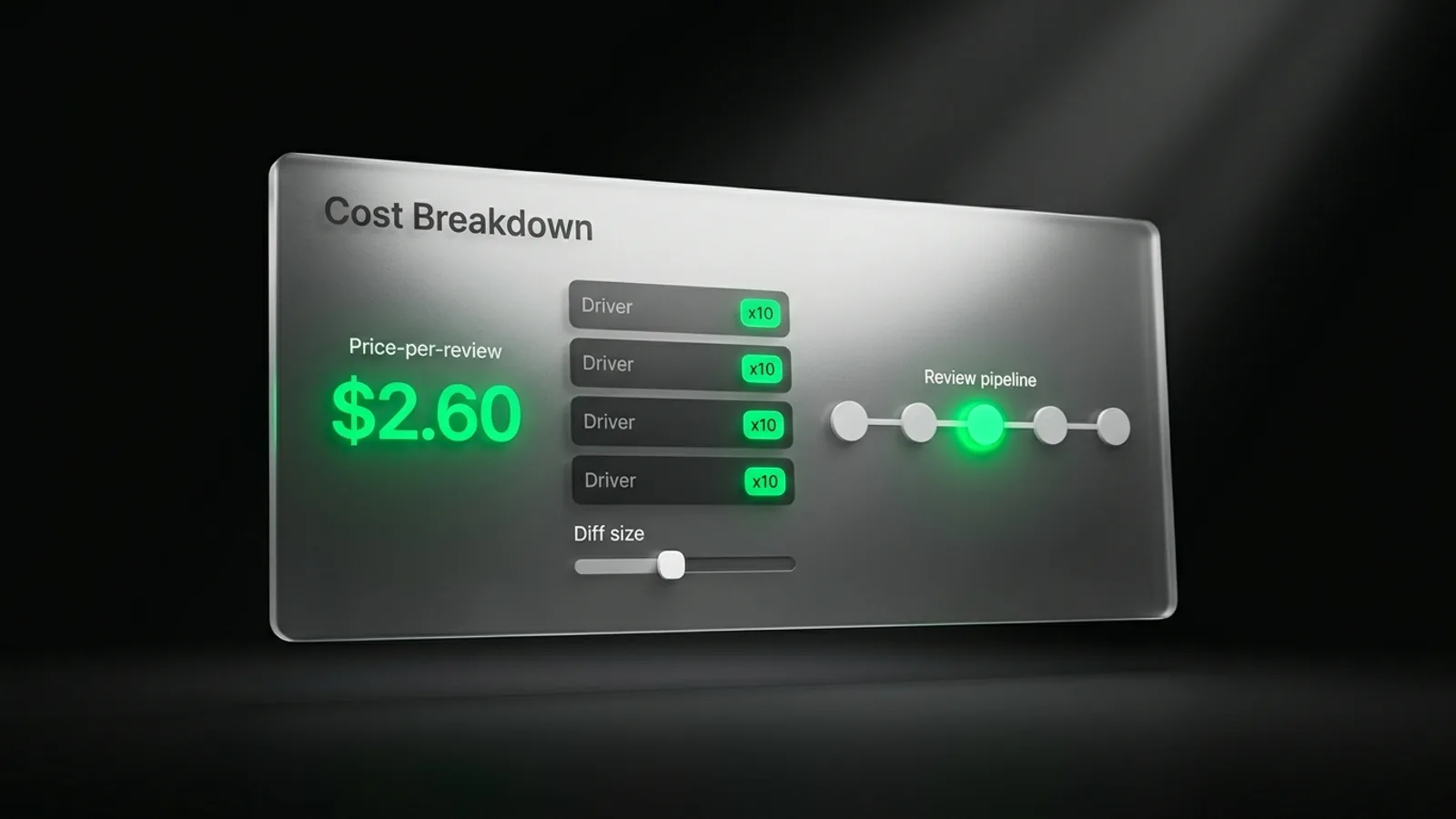
Anthropic’s own cost documentation is unusually direct: what you spend depends on the cost of each review and on how many reviews run. Two multipliers, and both are under your control to a degree.
The cost of each review scales with four things. The review level, which is Quick, Standard, or Deep, where each step up costs more because Claude takes a more thorough pass. The size of the change. The complexity of the surrounding code, because Claude reads more of the codebase to judge a change in a dense module. And how many candidate issues need verification, since Code Review deliberately adversarially verifies its own findings before posting them, and every verification is more tokens.
The number of reviews is decided per repository by a setting that feels innocuous in the admin page and is not. A repository you add starts at “after every push”, which runs the most reviews. That means the review count for a pull request is not one, it is the number of pushes on that pull request. A five-push PR on that default is five full reviews of the same change, each carrying the whole diff plus surrounding context. Switch to “once after PR creation” and the same PR costs one review. Same code, same findings, a fraction of the spend.
There is a detail worth flagging for FinOps specifically: PR Steward is designed not to approve or merge. It reacts to failing CI, merge conflicts, and review feedback, and after every push it comments with what it changed and how to undo it. Useful, but that loop of push, fix, push, fix is exactly the pattern that multiplies reviews on a per-push setting. The agent that fixes things is also the agent that generates the events that trigger more billing.
Claude Approvals has no base charge, but classifiers in a policy are billed on the tokens they use. And a policy that uses Claude’s review triggers a billed Code Review, even in observe-only mode. Observe mode is a safety feature, not a free trial.
The 30-day credit offer hides the recurring number
Anthropic is offering eligible Claude Enterprise organizations at least $10,000 in Claude Ship credits, to be used within 30 days of claiming, with claims open until January 15, 2027.
Ten thousand dollars is a substantial pilot budget, and it tells you something about expected consumption. Nobody hands out a month of credits for a feature that costs a business a few hundred dollars to try. If your organization runs a few hundred pull requests a month across active repositories, that credit can disappear well before the 30 days are up, and the first invoice after it expires is the one you should plan for.
The practical move is to treat the credit window as a measurement window. Anthropic gives you the exact instrumentation for it: the Claude Ship admin table shows an average cost per review for each repository. Multiply that average by the number of pull requests the repository opens in a month, and multiply again by typical pushes per PR if you left the per-push setting on. That product is your run rate. Do it while the credit is still paying the bill, not after.
Three hard limits and three soft ones
Three of the limits on Claude Ship are hard, and they disqualify whole categories of buyer. Organizations with Zero Data Retention cannot use it. Neither can HIPAA configurations, nor organizations using customer-managed encryption keys. If your enterprise agreement sits on any of those, the rest of this is academic: the feature is not available to you regardless of budget.
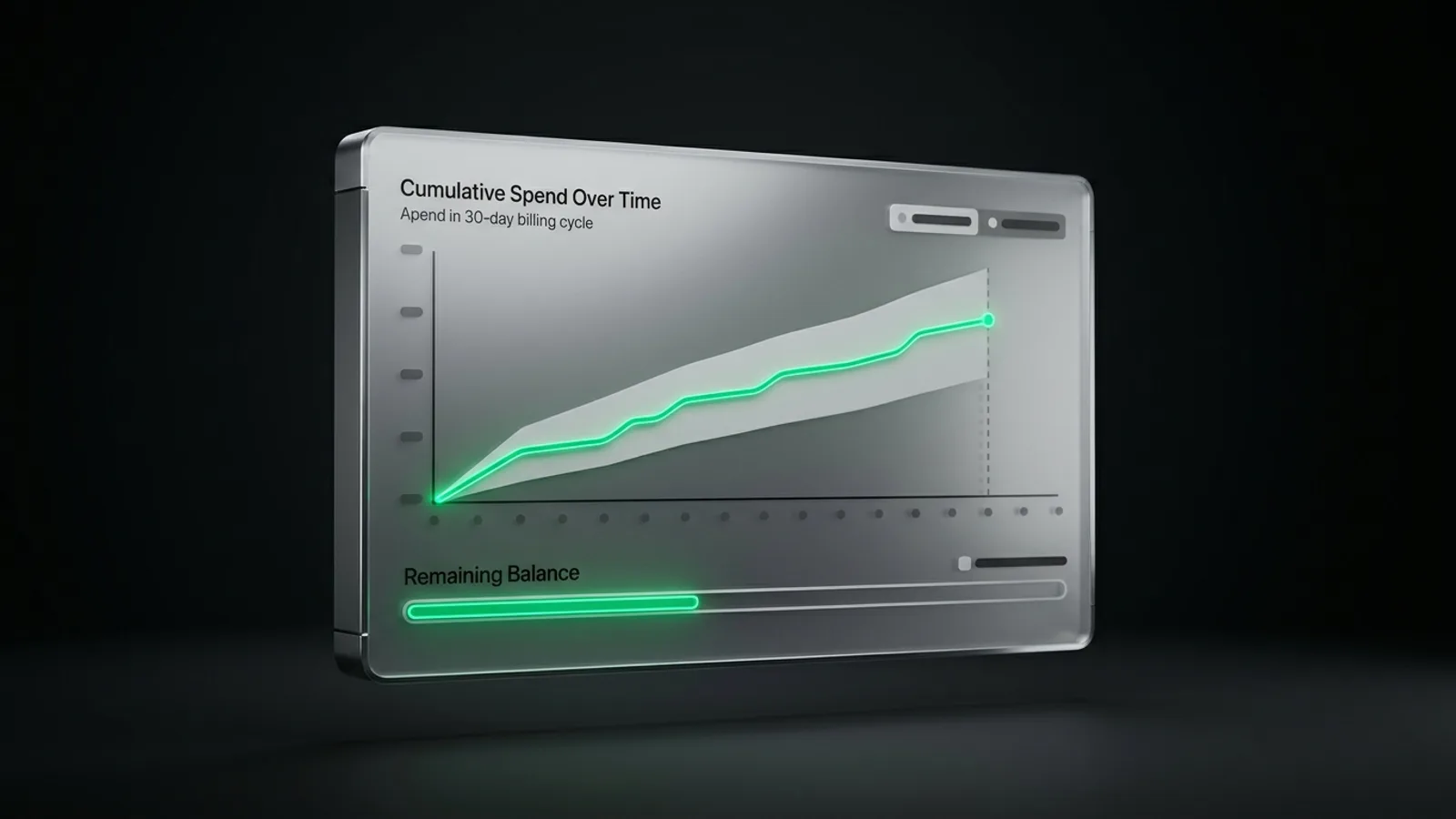
The soft limits are the ones that decide your mood at month end. Code Review skips reviews when the monthly limit you set for the Claude Code Review service runs out, when your organization’s overall monthly spend limit for usage credits runs out, or when your usage credit balance is exhausted. It also skips once what remains is less than the expected cost of one review. Developers see a comment naming the cause.
That behavior is honest, and it is also a hint about what life with metered review looks like. Reviews do not degrade gracefully. They stop, and they stop mid-sprint, on the pull requests that happen to land after the balance crosses the threshold. A codebase where review depends on a credit balance is a codebase where the merge queue has a financial dependency.
Also worth knowing: how you run Claude Ship matters for billing. Running the ship command in Claude Code counts as regular Claude Code usage, billed against your plan, while the automated repository-level reviews bill to usage credits. Two different meters for the same product, which is exactly how teams end up surprised by a line item they cannot trace to a person.
What this looks like next to the alternatives
Claude Ship is not the only entrant, and the comparison is where the buying decision happens. GitHub Copilot code review is bundled into enterprise Copilot arrangements that many teams already pay for, which is functionally free at the margin. Cursor Bugbot and CodeRabbit sell flat per-seat or per-repository subscriptions, which are predictable and therefore easy to budget. Anthropic’s model is the opposite: variable, per-token, per-review, per-push.
The trade is real. A subscription tool reviews every PR whether it is useful or not, at a fixed price. A metered review can be aimed: Deep on a payments module, Quick on a docs repository, off entirely on the generated-code repository nobody reads. You can also set a monthly cap and let it run out. That flexibility is worth money if you use it deliberately. It costs money if you leave the default on every repository and never look at the per-PR table.
The comparison is also not strictly either-or. Anthropic’s own materials note improved merged PR volume and a drop in the share of changes that had to be reverted after Code Review was introduced on the Claude Code team, and external customers describe reviewers whose time now goes to changes that need it. The value is in catching real bugs before a human looks. The question is what you pay per catch, and metered tokens do not tell you that until you measure it.
What to do before you turn it on
Start with one repository, not the organization. Pick a high-traffic repository where pull request volume is real but the blast radius of an automatic fix is contained.
Set review runs to once after PR creation for the first weeks. This single change removes the largest source of runaway spend, the per-push multiplication, and it lets you learn the baseline cost per review from Anthropic’s own average.
Run the approval policy in observe mode first, but budget for it. Observe mode bills for the Code Review it triggers. Watch what the policy would have approved before you let it approve anything.
Set the monthly spend limit for the Claude Code Review service before the pilot, and set it low. The setting exists precisely so the failure mode is a skipped review with a comment, not an invoice.
Pull the per-repository average cost per review into your FinOps ledger alongside your seats, your API spend, and your Cursor and Copilot lines. This is the number that lets you compare a variable review tool against a subscription one honestly, and it is the number that will change when Anthropic ships the next thing.
And record the excluded configurations in your procurement notes now. Zero Data Retention, HIPAA, and customer-managed keys block Claude Ship entirely. If those apply to your organization, the correct decision is not a cheaper pilot, it is a different tool.
The bottom line
Claude Ship moves a real engineering bottleneck, the post-PR review loop, onto a metered billing model. That is a sensible product and a new kind of exposure. The agents will do what you ask. The invoice will do what your defaults ask, and the defaults favor more reviews than you need.
The organizations that get value out of this will be the ones that treat the review level and the review trigger as financial controls, not as preferences, and that know their cost per mergeable pull request within a month of turning it on. Everyone else gets the fastest merge queue they have ever had, and a line item they only understand in hindsight.
Now available
Stop guessing your AI limits
The Mac and Windows app and the web dashboard show your Claude, ChatGPT, Gemini and more, and can warn you before you hit a limit.