Google Gemini 3.6 Flash Pricing: What Heavy AI Users Need to Know About the New Flash Lineup
Google launches Gemini 3.6 Flash at $1.50/$7.50 per million tokens with a new 3.5 Flash-Lite tier at $0.30/$2.50. What the expanded Flash lineup means for heavy AI users.

Google Just Reshaped the AI Cost Landscape
On July 21, Google released three new models that every heavy AI user needs to understand: Gemini 3.6 Flash, Gemini 3.5 Flash-Lite, and Gemini 3.5 Flash Cyber. The headline is a meaningful price cut combined with better token efficiency. The subtext is a clear strategic bet on agentic workflows as the dominant AI usage pattern.
For developers spending $300 to $5,000 per month on API costs, the Gemini Flash lineup has become one of the most cost-effective options in the market. Here is what changed and what it means for your bill.
Gemini 3.6 Flash: Cheaper Per Token and Per Task
The centerpiece of the launch is Gemini 3.6 Flash, priced at $1.50 per million input tokens and $7.50 per million output tokens. That is a price reduction from Gemini 3.5 Flash at $2.00/$8.00 per million, but the real cost story goes deeper.
Google reports that 3.6 Flash reduces output token usage by 17% compared to 3.5 Flash on the Artificial Analysis Index, and up to 65% on benchmarks like DeepSWE. When a model uses fewer output tokens to achieve the same result, the effective cost per task drops faster than the per-token price reduction alone would suggest.
Consider a heavy user processing 500 million input tokens and 100 million output tokens per month. At 3.5 Flash pricing, that workload costs $1,800 per month (500M x $2.00/M + 100M x $8.00/M). At 3.6 Flash pricing with the same token counts, it costs $1,500 per month. But with the 17% output token reduction, the actual output drops to 83 million tokens, bringing the total to $1,373 per month. That is a 24% savings versus waiting just one model generation.
Google gemini flash: The numbers that matter
The pricing comparison across the Gemini Flash family tells a clear story:
| Model | Input per 1M tokens | Output per 1M tokens | Output tokens/sec |
|---|---|---|---|
| Gemini 3.6 Flash | $1.50 | $7.50 | ~200 |
| Gemini 3.5 Flash | $2.00 | $8.00 | ~180 |
| Gemini 3.5 Flash-Lite | $0.30 | $2.50 | 350 |
| Gemini 3.1 Flash-Lite | $0.15 | $2.00 | ~350 |
The new pricing tiers create a three-layer strategy for heavy users. Use 3.6 Flash for complex reasoning and coding tasks where quality matters most. Use 3.5 Flash-Lite for high-volume agentic subtasks where speed and cost are the priority. Use 3.1 Flash-Lite for the highest volume throughput tasks that need maximum cost efficiency.
Gemini 3.5 Flash-Lite: The Agent Workhorse
The most interesting model in the lineup may be Gemini 3.5 Flash-Lite. Priced at $0.30 per million input tokens and $2.50 per million output tokens, it delivers 350 output tokens per second according to the Artificial Analysis Index. That makes it the fastest model in the 3.5 series by a wide margin.
What makes Flash-Lite strategically important is its performance in agentic workflows. On SWE-Bench Pro it scores 54.2%, outperforming the full Gemini 3 Flash model at 49.6%. On OSWorld-Verified it reaches 74.0% versus 65.1%. A model that costs less than half the price of the previous generation while outperforming it on key benchmarks is rare in any market.
For heavy AI users running multi-agent systems, Flash-Lite fills a specific role. When a planner model like 3.6 Flash or Claude Opus 4.8 decomposes a task into subtasks, Flash-Lite can execute those subtasks at a fraction of the cost of running every subtask through a frontier model. Google explicitly recommends this pattern: 3.6 Flash as the master agent, 3.5 Flash-Lite as the worker.
Gemini 3.5 Flash Cyber: Gated and Expensive
The third model, Gemini 3.5 Flash Cyber, is a cybersecurity fine-tune of 3.5 Flash. It is exclusively available to governments and trusted partners via CodeMender. For most heavy AI users, this model does not affect your cost calculations directly. But it signals that Google sees specialized security fine-tunes as a premium product tier they intend to gate and monetize separately.
How This Changes the Cost Math for Heavy AI Users
Before this launch, heavy AI users building on Google’s ecosystem had two Flash tiers: 3.5 Flash at $2.00/$8.00 and 3.1 Flash-Lite at $0.15/$2.00. The gap between a capable model and a cheap model was wide. Teams either paid premium Flash pricing or accepted the quality ceiling of Flash-Lite.
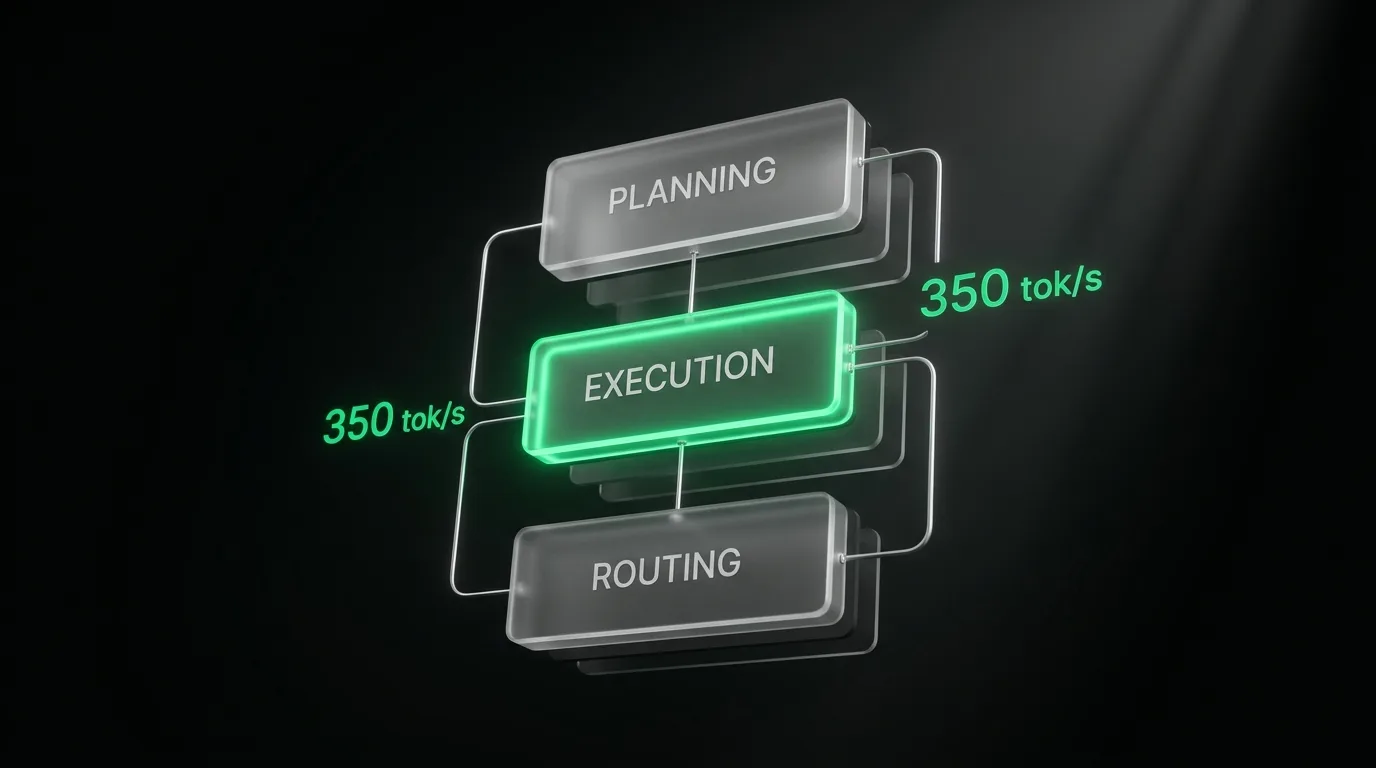
The new 3.5 Flash-Lite fills the gap almost perfectly. It is 5x cheaper than 3.5 Flash on input and 3.2x cheaper on output, yet outperforms 3 Flash on coding benchmarks. For a team processing 1 billion input tokens and 200 million output tokens per month on agentic coding tasks, the difference is substantial.
At entirely 3.5 Flash pricing: 1B x $2.00 + 200M x $8.00 = $3,600 per month. At a 70/30 split (70% 3.5 Flash-Lite, 30% 3.6 Flash): 700M x $0.30 + 300M x $1.50 + 140M x $2.50 + 60M x $7.50 = $210 + $450 + $350 + $450 = $1,460 per month.
That is a 59% reduction in API costs by intelligently routing between the two tiers.
The Agentic Workflow Playbook
Google’s focus on agentic workflow efficiency is not accidental. The 3.6 Flash release notes specifically highlight lower price per output token, reduced verbosity, and better performance on OSWorld-Verified and DeepSWE. These are not general-purpose chat benchmarks. They are agentic task benchmarks.
For heavy AI users, the playbook is straightforward:
Use Gemini 3.6 Flash as the reasoning and planning layer for complex agentic tasks where you need high-quality code generation, multimodal understanding, and multi-step reasoning. The lower verbosity means fewer output tokens per task, which compounds the per-token price cut.
Route high-volume, lower-complexity subtasks to Gemini 3.5 Flash-Lite. Its 350 tokens per second throughput makes it ideal for search, document processing, data extraction, and code execution verification.
Keep Gemini 3.1 Flash-Lite for the highest throughput batch processing where latency matters less than raw token economics.
What This Means for Multi-Provider Strategies
The new Gemini Flash pricing makes Google the most cost-effective option for agentic workloads that require high throughput and reliable performance. Claude Sonnet 5 is priced at $2.00/$10.00 per million tokens. GPT-5.5 is at $2.50/$12.50. Grok 4.5 runs at $2.00/$6.00 in Cursor.
Gemini 3.6 Flash at $1.50/$7.50 with 17% lower output token usage effectively undercuts all three on cost per completed task, while matching or exceeding their performance on agentic benchmarks.
For heavy AI users running a multi-provider stack, the recommendation is clear. Use Gemini 3.6 Flash and 3.5 Flash-Lite for the volume layer of your agentic workloads. Reserve Claude Opus 4.8 or GPT-5.6 Sol for the highest complexity tasks where a few extra points of benchmark performance justify premium pricing. Use a routing layer to automatically dispatch each subtask to the cheapest model that can handle it.
The Bottom Line
Google’s July 21 launch of Gemini 3.6 Flash and 3.5 Flash-Lite represents the most significant cost reduction in the AI API market since the Gemini 3 Flash launch. The combination of lower per-token pricing, better token efficiency, and a clear three-tier strategy for agentic workloads gives heavy AI users a powerful new tool for managing their API bills.
The models that matter for most heavy users are 3.6 Flash for planning and complex tasks at $1.50/$7.50, and 3.5 Flash-Lite for high-volume execution at $0.30/$2.50. The 17% output token reduction on 3.6 Flash compounds the savings beyond the headline price cut. And the 54.2% SWE-Bench Pro score on Flash-Lite at those prices is genuinely hard to beat.
If you are spending more than $500 per month on AI APIs, your cost optimization strategy for the second half of 2026 starts with evaluating these models.
Now available
Stop guessing your AI limits
The Mac app and web dashboard watch your Claude, ChatGPT, Gemini and more, and warn you before quotas hit.