OpenAI IPO Filing: What Heavy AI Users Need to Know About API Pricing and Access
OpenAI is preparing to file for IPO as soon as this week. Here's what this historic filing means for developers, businesses, and heavy API users paying $300+ monthly.
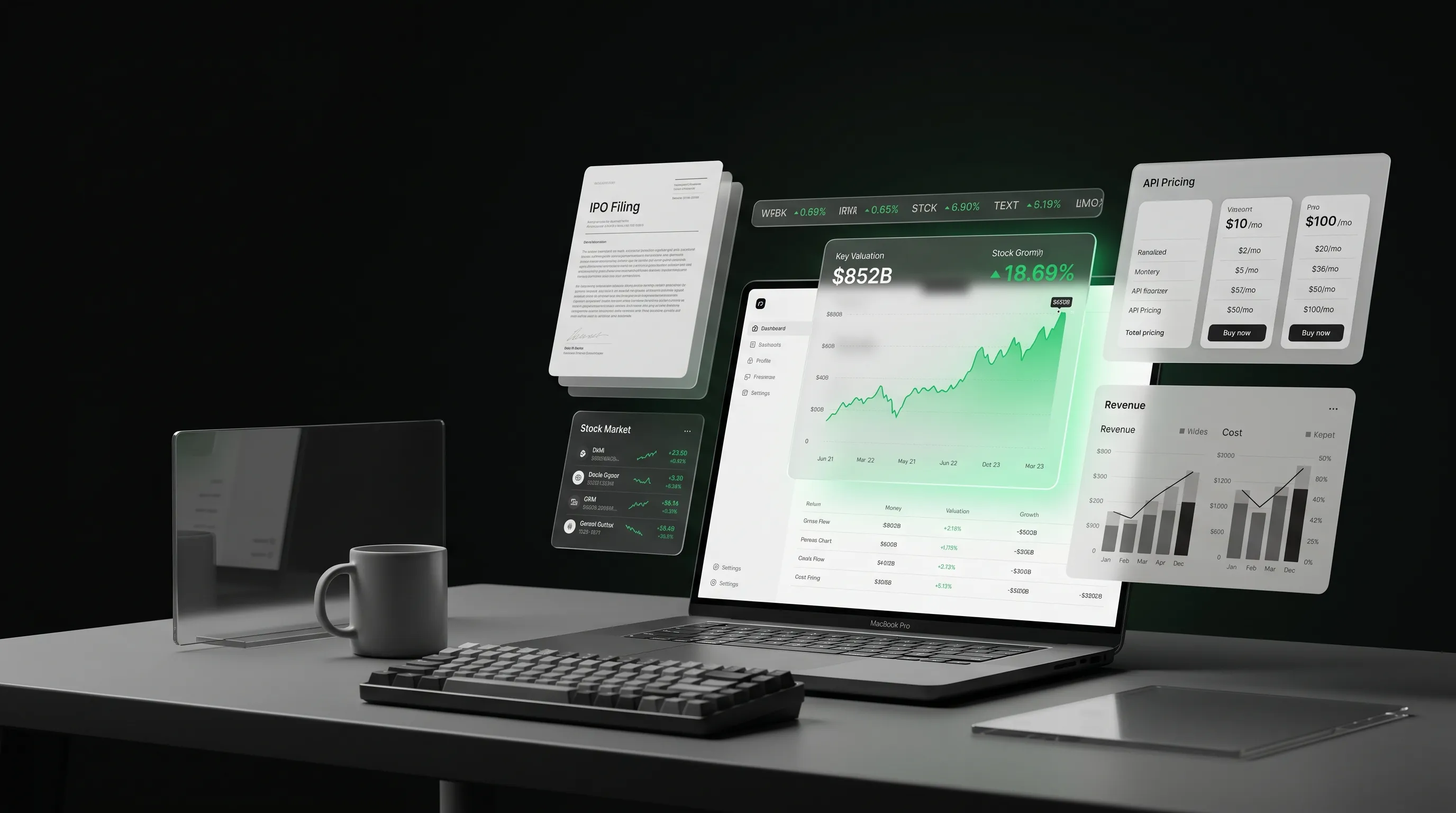
Breaking news just hit the AI world: OpenAI is preparing to confidentially file for an IPO as early as this Friday, according to exclusive reports from The Wall Street Journal and confirmed by multiple sources. The company is working with Goldman Sachs and Morgan Stanley on what could become one of the largest tech IPOs in history.
For the TokenKarma community—developers, businesses, and power users spending $300+ monthly on AI services—this isn’t just financial news. This IPO will fundamentally reshape how we access and pay for AI.
The Numbers That Matter to Your AI Budget
OpenAI’s current private valuation sits at a staggering $852 billion, making it more valuable than most Fortune 500 companies. But here’s what really matters for your monthly AI spend:
Revenue vs. Costs Reality Check:
- $13.1B in annual revenue (massive growth from $3.4B in 2024)
- $22B in annual spending (infrastructure costs are brutal)
- Operating at a significant loss, burning through capital
This disconnect between revenue and costs directly impacts API pricing strategy. As a public company, OpenAI will face quarterly pressure to show profitability—and that typically means higher prices for heavy users.
What Public Company Pressure Means for API Pricing
Going public changes everything for AI companies. Here’s what heavy users should expect:
1. Tiered Pricing Gets More Aggressive
Public companies love predictable, scalable revenue. Expect OpenAI to push enterprise contracts harder and potentially restructure usage-based pricing to favor long-term commitments. If you’re currently paying per-token without volume discounts, that flexibility might get expensive.
2. Infrastructure Costs Passed to Users
OpenAI’s $22B annual burn rate isn’t sustainable under public scrutiny. Much of this goes to compute infrastructure—the massive NVIDIA clusters needed for model training and inference. Public market investors will demand these costs get passed to customers, especially high-volume users.
3. Premium Features Behind Higher Tiers
The IPO prospectus will likely highlight “monetization opportunities.” Translation: features currently included in standard API access might migrate to premium tiers. Think advanced reasoning, longer context windows, or priority access during high-demand periods.
Competitive Landscape Shifts
OpenAI’s IPO creates ripple effects across the entire AI ecosystem:
Anthropic’s Response: With Claude gaining ground among heavy users, Anthropic (valued at $900B privately) will likely accelerate their own IPO plans. Competition between public AI companies could benefit users through pricing wars—or harm them through coordinated pricing strategies.
Google and Microsoft Advantage: These public companies can now point to profitability pressure at OpenAI when justifying their own AI service pricing. Expect Gemini API and Azure OpenAI to adjust pricing in response.
Strategic Moves for Heavy AI Users
If you’re spending significant money on OpenAI APIs, here’s your action plan:
Lock in Current Pricing
Contact OpenAI sales about multi-year enterprise agreements before the IPO. Post-IPO pricing will reflect public company growth targets.
Diversify Your AI Stack
Don’t put all your AI spend in one basket. Anthropic’s Claude, Google’s Gemini, and open-source alternatives like Llama provide leverage in pricing negotiations.
Budget for 15-25% Price Increases
Historical data from other SaaS IPOs shows average price increases of 15-25% within 18 months post-IPO. Plan accordingly.
Monitor Enterprise Tier Changes
OpenAI will likely restructure enterprise offerings to show investors “premium customer growth.” If you’re on standard API pricing, watch for pressure to upgrade.
The Democratization vs. Monetization Tension
OpenAI’s mission statement talks about “ensuring artificial general intelligence benefits all humanity.” But public markets care about shareholder returns. This creates tension between:
- Accessibility: Keeping AI tools affordable for developers and small businesses
- Profitability: Maximizing revenue per user to satisfy Wall Street
For heavy users, this likely means graduated pricing structures where your first 1M tokens stay affordable, but heavy usage gets expensive fast.
Infrastructure Investment and Quality
There’s potential upside: IPO capital will fund massive infrastructure expansion. This could mean:
- Better API reliability and uptime
- Faster response times globally
- More model variants optimized for different use cases
- Reduced rate limiting for premium tiers
Timeline and What to Watch
Immediate (Next 2-4 weeks):
- IPO filing becomes public
- Current pricing and terms remain stable
Short-term (3-6 months post-filing):
- Pricing structure announcements
- New enterprise tier rollouts
- Volume discount restructuring
Long-term (6-18 months post-IPO):
- Quarterly earnings pressure drives pricing optimization
- Competition response from other AI providers
- Potential acquisition spree using IPO capital
Bottom Line for Token Counters
OpenAI’s IPO marks the end of the “growth at all costs” era in AI. For heavy users, this means:
- Budget accordingly: Plan for higher costs within 12-18 months
- Negotiate now: Lock in favorable terms before public market pressure hits
- Diversify providers: Reduce dependency on any single AI service
- Monitor consumption: Implement better usage tracking and optimization
The AI industry is maturing from venture-funded experimentation to public market discipline. Your AI costs are going up—the question is by how much and how fast.
For TokenKarma users already optimizing AI spend across multiple providers, this IPO validates your strategy. For those all-in on OpenAI, it’s time to develop contingency plans.
The golden age of cheap, accessible AI isn’t ending—but it’s definitely evolving. Stay informed, stay diversified, and keep counting those tokens.
Now available
Stop guessing your AI limits
The Mac app and web dashboard watch your Claude, ChatGPT, Gemini and more, and warn you before quotas hit.