OpenAI Is Cutting Off Cursor By November 12: What Heavy Users Do Now
OpenAI is withdrawing its models from Cursor after the SpaceX acquisition, with a November 12 shutoff. What heavy users should do about routing and costs.
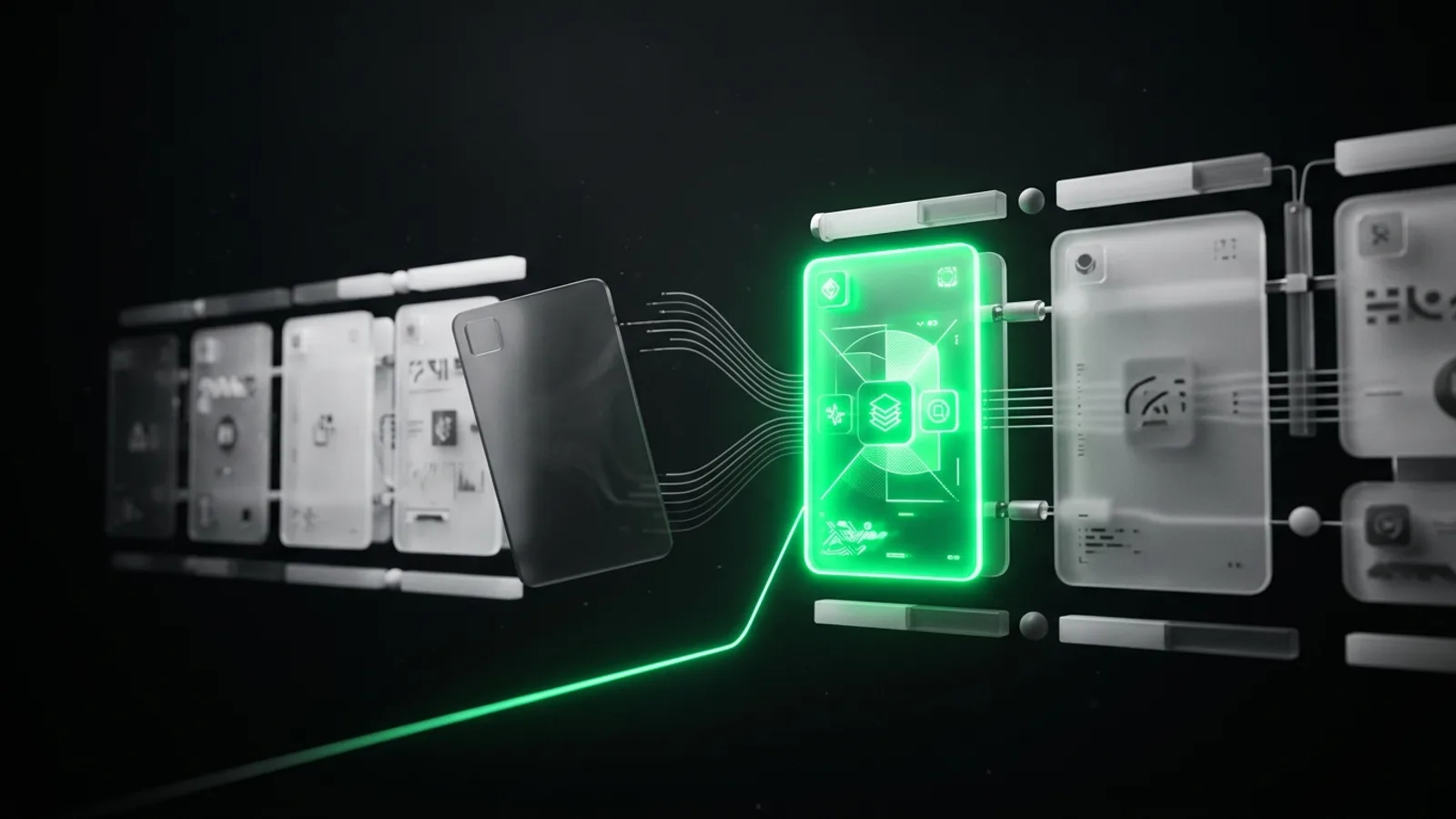
OpenAI just pulled the plug on the model pipeline that a chunk of the AI coding world quietly depends on. On August 28, 2026, OpenAI told SpaceX that it intends to wind down its contract providing OpenAI models to Cursor, the coding tool SpaceX acquired on August 14 for $60 billion. The proposed shutoff date is November 12, 2026, and OpenAI says it will stop sending future models to the platform as well. If you pay for Cursor and lean on its model routing, you now have about two and a half months to figure out what you will run instead, and what it will cost you.
What OpenAI Actually Announced
The news landed as a short open letter from OpenAI titled “Our decision on Cursor following its acquisition by SpaceX.” The core points are simple. OpenAI notified SpaceX it is ending the contract that puts OpenAI models inside Cursor, with a proposed shutoff of November 12, 2026. OpenAI says it chose the latest contractually permitted cancellation window to give developers the maximum runway, and that it will not provide its future models, pointing specifically at the upcoming frontier model it calls Astra, to Cursor.
The stated reason is trust and terms of service. OpenAI says it cannot be confident SpaceX will use its technology within OpenAI’s terms, citing Musk’s companies violating similar deals before. It references the contract break after Musk acquired Twitter (now part of SpaceX) and an admission under oath this year that xAI, also folded into SpaceX, had distilled OpenAI data to train models in violation of OpenAI’s terms. Those terms, OpenAI notes, are similar to xAI’s own.
What This Means for Your Cursor Subscription
The most direct consequence is for developers like a large share of TokenKarma readers who use OpenAI models inside Cursor. When you pick “o4” or a GPT model in Cursor today, you are consuming quota from Cursor’s bundled deal with OpenAI. That deal ends November 12. After that date you cannot count on OpenAI models being selectable in Cursor the way they are now.
Three things to check immediately rather than assume are fine.
First, look at which model you actually route through. Many heavy users default to whatever Cursor suggests or to the strongest bundled model, and a surprising portion of that turns out to be an OpenAI model. If you changed nothing since setting up, audit your session model picker and your history to see how often you hit an OpenAI model versus Grok, Claude, or Gemini.
Second, check where your quota is sitting. If you bought a Cursor plan partly because it bundled OpenAI-model credits, that bundled value is evaporating on a known date. That changes the effective cost-per-task of your whole subscription, not just the model picker. A plan that looked cheap because it bundled a strong OpenAI model starts looking different when that bundled model is gone.
Third, plan the accounts and keys you will lean on after the cutover. Cursor still works with other providers, and OpenAI models remain available directly through OpenAI’s own Codex and API. The question is not whether you can keep coding with strong models; it is whether you want the routing, the bundled pricing, and the middleman Cursor provides, or whether a direct provider relationship ends up cheaper for your workload.
The Real Risk Is Rethreading Your Workflow
The painful part of this change is not the model itself, it is everything bolted onto the model inside Cursor. Rules, agent profiles, context packing, MCP servers, and the cached setup you have tuned over months all sit on top of your model choice. If that model is an OpenAI model, rerouting to a different model can change output quality, verbosity, token spend, and failure modes in ways you will not see until you run your real agents through them.
Heavy agentic users in particular should treat the next month as a test window, not a waiting period. Run your most expensive, most common agentic tasks through the alternatives you are considering, on both Grok and Claude and Gemini routes in Cursor, and compare tokens consumed, wall-clock time, and finished quality. Token costs diverge hard between these models, and a model that is 30 percent cheaper per token but 2x more wasteful on output length can end up costing you more per finished task.
This is also a reminder to keep your model access to OpenAI independent of one vendor middleman if OpenAI models are part of your daily stack. If you rely on gpt-class models for coding, maintaining a direct API or Codex relationship means you control the cutoff date, not a third party negotiating between you and the model vendor.
The Bigger Signal in the AI Pricing War
Step back and the November 12 date is a marker in a much larger commercial war. OpenAI and SpaceX were uneasy bedfellows the moment SpaceX closed the Cursor deal, since SpaceX also owns xAI and has been steering Cursor toward Grok models and its own Composer line. With OpenAI exiting Cursor, the coding assistant market splits into more openly rival camps: OpenAI’s Codex on one side, and SpaceX’s Cursor on the other, with Google and Anthropic still courting both.
For the TokenKarma audience this is less about allegiances and more about optionality and price. The more the major frontier labs route developers to their own tools, the more your routing decisions and subscription choices actually matter. You are no longer comparing four interoperable model providers, you are comparing four partially walled ecosystems, each trying to keep you on its own stack and its own billing.
Keep an eye on two things between now and November 12. Watch whether Cursor relinks OpenAI models through a direct BYO-API-key path, which would let you keep using them by paying OpenAI directly inside Cursor. And watch what pricing incentives each side throws at the developer market in the next few months, because a bidding war for coding developers is exactly the moment it pays to stay flexible and compare cost per finished task rather than cost per million tokens.
What to Do This Week
If OpenAI models in Cursor matter to your workflow, run this checklist now rather than waiting for the cutover.
Audit your actual model usage in Cursor over the last 30 days to quantify how much of your work touches an OpenAI model. Check your bundled plan details to see what value you are losing at the November 12 shutoff. Test at least one strong alternative on your real agentic workloads and note tokens, latency, and task quality. Maintain or open a direct path to OpenAI models, via Codex or an API key, if you want the option to keep them after Cursor drops them. And re-run your cost-per-task math after choosing a plan, because the composition of what is bundled is about to change.
The headline is a breakup between two billion-dollar companies. The practical takeaway is simpler: your model routing, your quotas, and your effective cost per task are all about to shift on a fixed date you can plan around. A couple of hours of testing now is the cheapest insurance against a November surprise on your AI bill.
Now available
Stop guessing your AI limits
The Mac app and web dashboard watch your Claude, ChatGPT, Gemini and more, and warn you before quotas hit.