DeepSeek DSpark: 60-85% Faster Inference and What It Means for API Pricing in 2026
DeepSeek's DSpark framework makes V4 Pro 60-85% faster. Here is what this means for DeepSeek API pricing, throughput headroom, and your monthly bill.
DeepSeek just open-sourced DSpark, a new speculative decoding framework that accelerates per-user generation speeds on their V4 serving cluster by 60 to 85 percent at matched throughput levels. The paper landed on HackerNews on June 27 with 755 points and 317 comments, making it one of the most-discussed AI research drops of the week.
If you are paying for DeepSeek V4 Pro API access, this is not an academic announcement. It rewrites the cost-per-task calculus in ways that are not obvious from the headline numbers.
What DSpark Actually Does
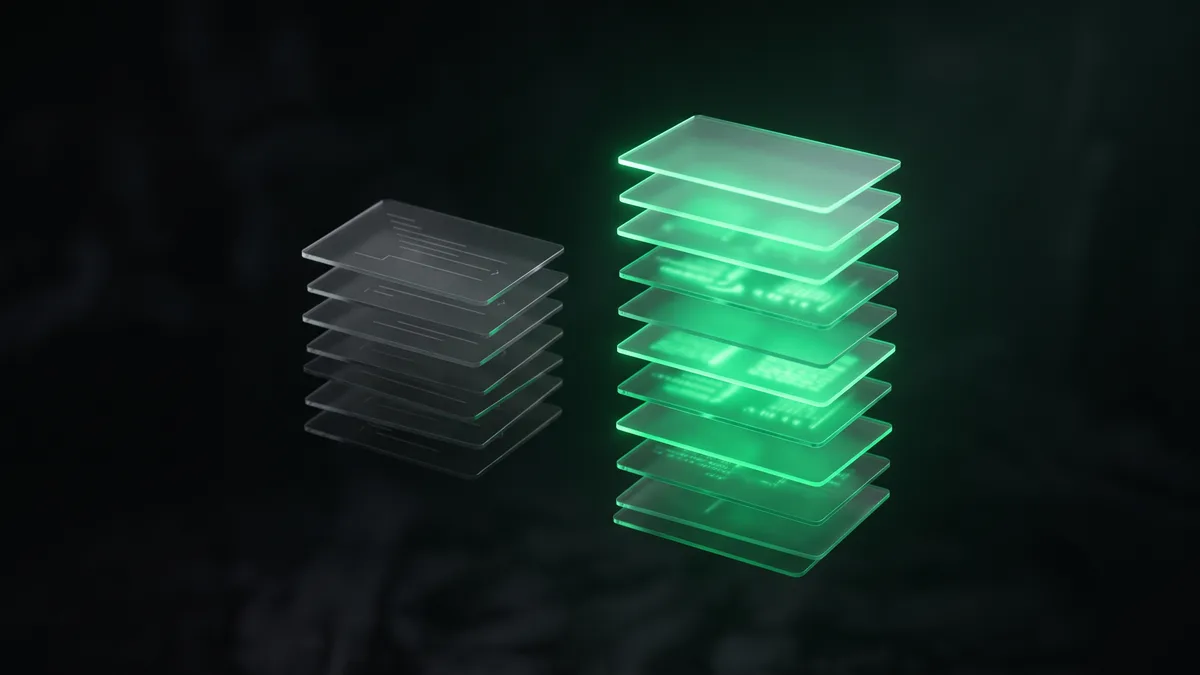
Speculative decoding is a technique where a small, cheap draft model proposes a block of candidate tokens, and the full-size target model verifies the entire block in a single forward pass. When the draft tokens are accepted, you get multiple output tokens for roughly the price of one target-model pass. When they are rejected, you fall back to the standard autoregressive step and lose nothing in quality.
The problem with existing parallel drafters is that they predict every position independently. No token knows about its neighbors. This leads to “rapid acceptance decay” at later positions: the first draft token might be accepted at 90%, but by the eighth position acceptance drops below 30%. Long draft blocks become inefficient.
DSpark solves this with two mechanisms:
Semi-autoregressive architecture: A lightweight sequential module runs after the parallel backbone to introduce intra-block dependencies. Each draft position sees a summary of what the positions before it proposed. Acceptance rates stop falling off a cliff at the end of long blocks.
Confidence-scheduled verification: Instead of verifying all proposed tokens regardless of their likely quality, DSpark dynamically tailors the verification length for each request based on estimated prefix survival probabilities and the current load on the serving engine. Under high concurrency, it verifies shorter blocks to avoid wasting batch capacity. Under low concurrency, it expands to longer blocks to maximize speed.
The net result on live DeepSeek V4 traffic: 60 to 85 percent faster per-user generation at matched throughput. They also report it “shifts the Pareto frontier of their serving system” by enabling performance tiers that were previously unattainable under strict interactivity constraints.
Why Speed Matters for DeepSeek API Pricing
DeepSeek V4 Pro API pricing is currently among the most competitive in the market: $0.27 per million input tokens and $1.10 per million output tokens (cached input drops to $0.07). That is roughly 95 percent cheaper than Claude Opus for the same task.
But token cost is only half the story for heavy users running agentic workflows. The other half is latency. When you chain 10 LLM calls in an agent loop and each one takes 8 seconds to return 500 tokens, your agent takes 80+ seconds per cycle. At 50 cycles per day that is over an hour of wall-clock time your engineer is waiting.
DSpark compresses that. If the average V4 Pro response goes from 8 seconds to 4.5 seconds, that same agent runs in under 45 minutes. For teams running parallel agents, the throughput headroom freed up means you can run more concurrent jobs before hitting rate limits, which directly reduces your queuing costs and improves utilization.

DeepSeek V4 Pro Pricing vs the Competition: Updated View
The DSpark deployment does not change DeepSeek’s published per-token rates. What it changes is the effective value per dollar. Here is how the stack looks today for a typical heavy user doing 100 million output tokens per month:
| Provider | Output price per 1M tokens | Monthly cost (100M tokens) |
|---|---|---|
| DeepSeek V4 Pro | $1.10 | $110 |
| Gemini 3.5 Flash | $3.50 | $350 |
| GPT-5.5 (standard) | $15.00 | $1,500 |
| Claude Opus 4.8 | $75.00 | $7,500 |
DeepSeek V4 Pro is already the cheapest frontier-grade option at full API rates. Now it is also 60 to 85 percent faster in practice. For workloads where latency is a second-order concern (batch processing, overnight pipelines), the pricing gap alone is compelling. For workloads where latency directly affects the user experience or agent loop throughput, DSpark makes V4 Pro a more serious default.
The Open-Source Angle Changes the Competitive Pressure
DeepSeek did not just deploy DSpark internally. They open-sourced the checkpoints alongside DeepSpec, an algorithm-driven training repository for speculative decoding. This puts the technique in the hands of every inference provider running DeepSeek weights.
That means Together AI, Fireworks, Groq, and any other provider hosting V4 Pro can theoretically implement DSpark and pass the speed gains to their customers. It also means providers running Qwen, Llama, or other open-weight models can adapt the approach for their own stacks.
The medium-term implication for DeepSeek API pricing: speed improvements are likely to reach third-party hosts within weeks to months, not quarters. If you are currently paying a premium for latency through a provider like Groq (fast hardware, different cost structure), the gap is about to narrow from the software side.
What to Watch
There are two signals worth tracking over the next few weeks.
First, whether DeepSeek updates its API tiers to reflect the new throughput capabilities. At 60 to 85 percent faster generation, they have headroom to either serve more users at the same price, cut prices to gain share, or introduce tiered latency SLAs. None of those outcomes are bad for heavy users.
Second, whether the Anthropic export ban on Mythos and Fable 5 persists long enough to drive meaningful enterprise migration to DeepSeek. The TechCrunch story from June 27 reporting on Sakana Fugu and China’s 360 launching Mythos-comparable models is a separate datapoint, but it points to the same pressure: frontier AI access is diversifying and the DeepSeek pricing advantage is widening, not narrowing.
For TokenKarma users tracking their AI spend across providers, V4 Pro just became harder to ignore. The published DeepSeek API pricing was already the lowest for production-grade output quality. DSpark adds a meaningfully better time-per-task, which is the variable that most directly controls how much you spend per unit of real work done.
Now available
Stop guessing your AI limits
The Mac app and web dashboard watch your Claude, ChatGPT, Gemini and more, and warn you before quotas hit.